
When wildfire smoke gets into your house, the most important steps are to close it up, run filtration that does not produce ozone, and change HVAC filters after the event. Most homes need only light cleaning afterward. Heavy, lingering odor or visible residue calls for a more thorough cleanup of surfaces, soft goods and ducts.
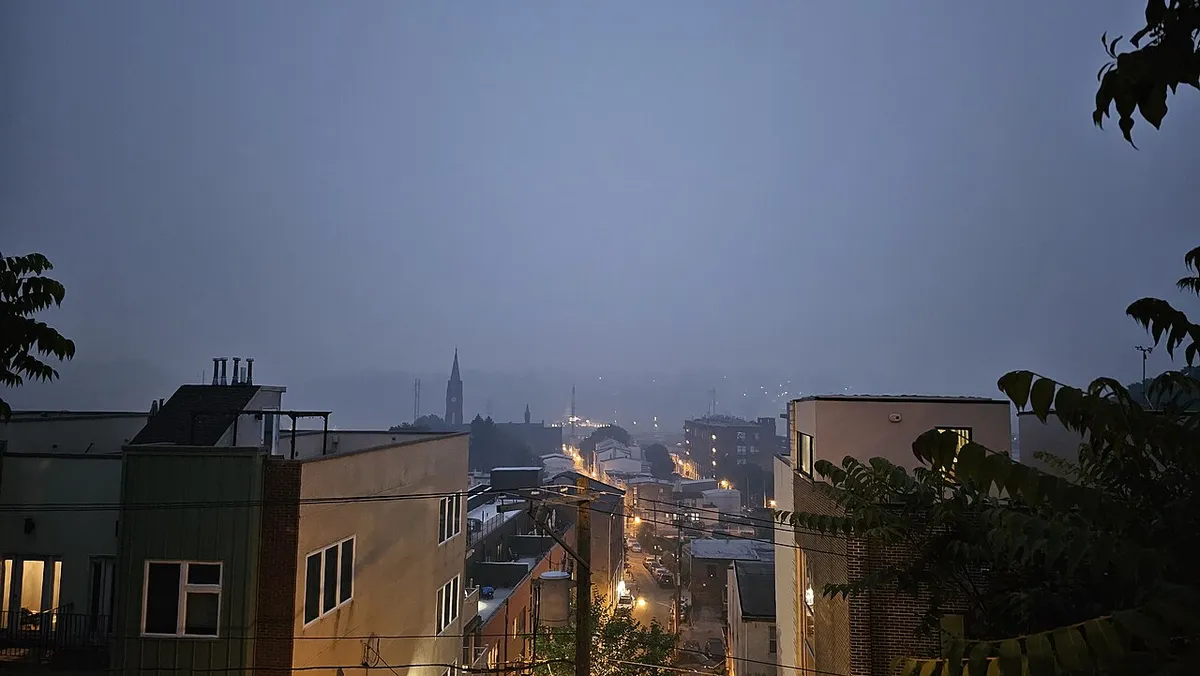
Chester County is a long way from most wildfires, but distance does not guarantee clean air. In June 2023, smoke from wildfires in Canada pushed air quality across Pennsylvania to unhealthy and hazardous levels. Smoke like that does not stay outside. It slips in through windows, doors, gaps and ventilation, so a home in Exton can smell smoky even when no fire is nearby.
What happened in 2023
On June 7, 2023, the Pennsylvania Department of Environmental Protection declared a Code Red air quality action day statewide because of smoke from Canadian wildfires (PA DEP, June 7, 2023). The next day, DEP reported that hazardous air conditions persisted in South Central and Eastern Pennsylvania and urged people to stay indoors (PA DEP, June 8, 2023).
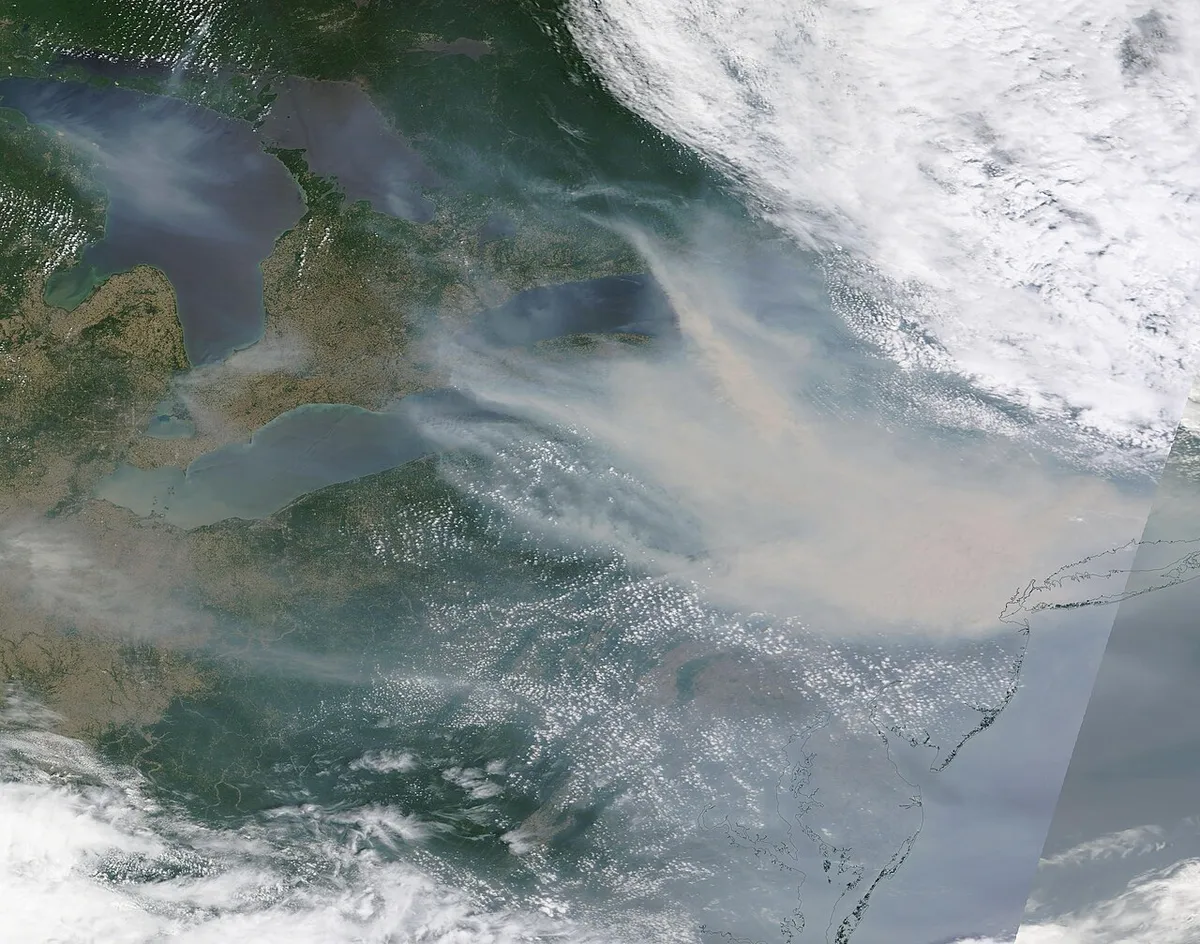
That was not a one-time curiosity. Smoke events can return, and it helps to have a plan for your home before the next one.
How wildfire smoke gets inside
Smoke is made of fine particles and gases. It enters through:
- Open windows and doors, and every time someone goes in and out.
- Gaps around windows, doors, attic hatches and plumbing penetrations.
- Bathroom and kitchen exhaust fans, which pull outdoor air in through leaks elsewhere.
- HVAC systems that bring in outside air, including some fresh-air intakes on newer homes.
- Dryer vents and fireplace flues with open dampers.
Townhomes and newer construction around Exton are often tighter than older homes, which helps, but they still pull in outdoor air whenever exhaust fans run.
Before and during a smoke event
Watch the forecast
Check AirNow for the current Air Quality Index and forecasts for your ZIP code. Sign up for Chester County's ReadyChesCo alerts through the county's alerts page for local emergency notices.
Create a clean room
EPA recommends setting up a clean room, ideally a bedroom with few windows and doors (EPA: Create a clean room). Key points from EPA:
- Use a portable air cleaner sized for the room, and pick one that does not produce ozone.
- If you have central air, use a filter rated MERV 13 or higher if your system can handle it.
- Set the system to recirculate rather than draw in outside air.
- Avoid activities that add particles indoors, such as frying, burning candles or vacuuming with a non-HEPA vacuum.
Close up the house
- Keep windows and doors closed.
- Close the fireplace damper.
- Limit exhaust fan use while smoke is heavy.
- If it gets too hot to stay closed up, follow local health guidance about cooling centers.
After the smoke clears
Change filters
HVAC filters do a lot of work during a smoke event. Replace the furnace filter once air quality returns to normal. Replace or clean portable air cleaner filters according to their instructions. EPA's guidance on air filters explains how filter ratings relate to fine particles (EPA: Air cleaners and air filters).
Air out
Open windows when outdoor air is good to flush stale air out.
Light cleaning
Most homes need only routine cleaning after a distant smoke event:
- HEPA vacuum floors, rugs and upholstery.
- Damp-wipe hard surfaces like windowsills and countertops where fine dust settled.
- Wash curtains and bedding that smell of smoke.
- Clean or replace the filter on window air conditioners.
When it is more than light cleaning
Call for an inspection if:
- Smoke odor lingers more than a few days after outdoor air clears.
- You see gray film on windowsills, blinds or white surfaces.
- Someone in the home has asthma, COPD or heart disease and symptoms are worse indoors.
- Smoke entered through an open window or HVAC intake for an extended period.
- You have a home office or business with lots of fabric, paper or electronics.
In those cases, cleanup may involve HEPA vacuuming soft goods, cleaning surfaces systematically, checking the duct system and treating odor. Our smoke odor removal methods guide explains which odor tools are safe and effective.
Avoid these mistakes
- Ozone machines. EPA warns that ozone is a lung irritant and that ozone generators have little potential to clean indoor air at safe levels (EPA on ozone generators). Running one during a smoke event makes indoor air worse.
- Burning candles or incense to cover smoke smell.
- Running exhaust fans constantly while outdoor air is bad.
- Leaving the HVAC on fresh-air mode.
Businesses in Exton
Exton has a lot of offices, shops and medical practices along the Route 100 and Route 30 corridors. For a business, a smoke event can mean stale air in a closed building over a weekend, then complaints from staff on Monday. Check whether your building's HVAC draws outside air, how filters are rated, and who is responsible for changing them. Our commercial restoration guide covers what building managers should plan for.
A simple smoke day plan for your household
Writing a plan down before the next smoke event means you are not guessing when the sky turns orange.
- Pick the clean room now. Choose a bedroom you can close up, with a door that seals reasonably well.
- Buy filters ahead of time. Smoke events make filters scarce. Keep a spare furnace filter and a spare filter for any portable air cleaner.
- Know your HVAC settings. Find out whether your system has a fresh-air intake and how to close it or set the system to recirculate.
- Plan for people at higher risk. Children, older adults, pregnant people and anyone with heart or lung conditions need the cleanest air in the house.
- Plan for pets. Bring them in and limit outdoor time when air quality is poor.
- Have a backup cooling option in case closing up the house makes it too hot.
Reading the Air Quality Index
AirNow reports air quality on a color scale from green (good) through yellow, orange, red and purple to maroon, the hazardous level. On June 8, 2023, PA DEP described conditions in South Central and Eastern Pennsylvania at the hazardous level. Check AirNow by ZIP code, and use the same scale to decide when to open the windows again afterward.
Frequently asked questions
Does wildfire smoke damage a house?
Distant smoke usually leaves only light residue and odor, which routine cleaning and filter changes handle. Long exposure through open windows or intakes can leave more residue on soft goods and in ducts.
What air purifier should I use for wildfire smoke?
EPA recommends a portable air cleaner sized for the room that does not produce ozone. A HEPA filter captures fine particles. Check the unit's rated room size.
How do I get wildfire smoke smell out of my house?
Air the house out when outdoor air is good, change HVAC filters, HEPA vacuum, wash fabrics and clean hard surfaces. If odor lingers, have the home inspected.
Should I clean my air ducts after wildfire smoke?
Not always. Change the filter first. If odor keeps coming from the vents or you see residue at registers, have the system evaluated.
Sources
- PA DEP: Code Red air quality alert, June 7, 2023
- PA DEP: Hazardous air conditions persist, June 8, 2023
- EPA: Create a clean room during a wildfire
- EPA: Wildfire smoke and indoor air quality course
- AirNow
- Chester County Department of Emergency Services: Alerts
Smoke odor that will not leave?
Call (484) 293-9520 or use the quote form. We help Exton homes and businesses with smoke damage cleanup and odor control.