
Thanksgiving's coastal storm put all of Chester County under a High Wind Warning from 4 a.m. Thursday to 1 a.m. Friday. The National Weather Service in Mount Holly expected widespread gusts of 50 to 70 mph inland, and NBC10 Philadelphia reported that PECO had activated its emergency response team before the storm arrived. Downed limbs and missing shingles are easy to spot. The water that came in through walls, vents and windows during hours of wind-driven rain is harder to find, and it is the damage that tends to grow if nobody looks for it this weekend.
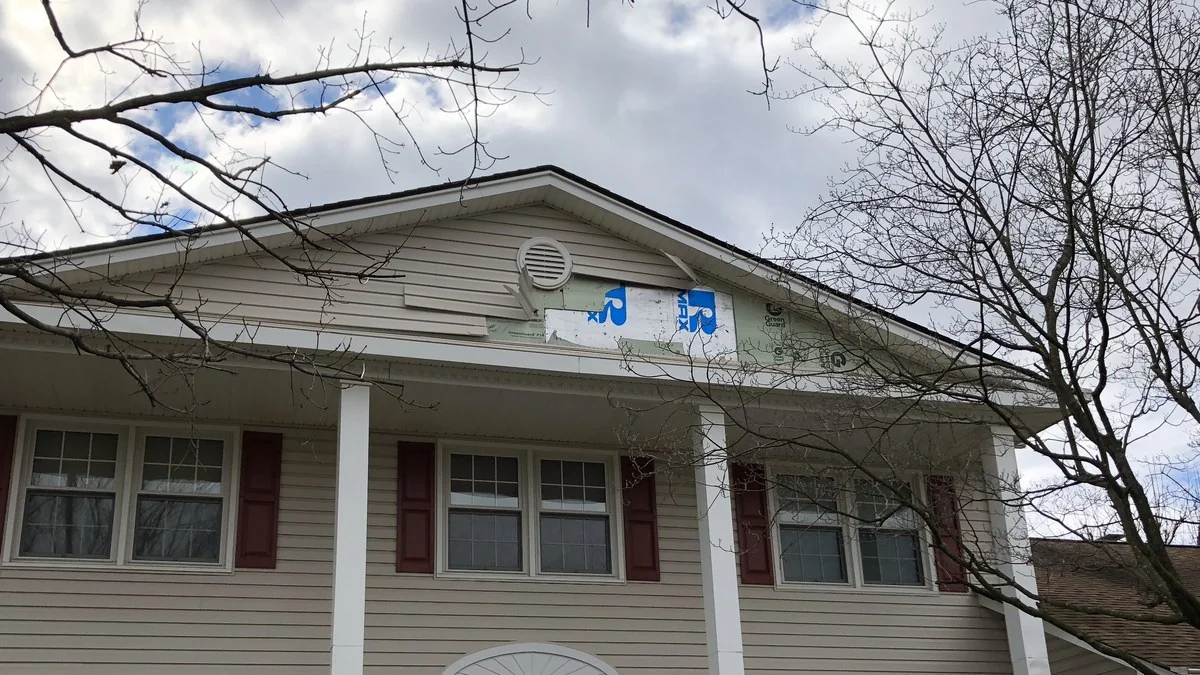
Here is where to look, what to photograph, and when to have moisture checked. This site is an independent request service. We don't do repairs ourselves. When you send a request, one local provider may contact you about an inspection or drying.
Why an east wind storm finds new leaks
A house usually shows its weak spots on the sides that take weather most often. Thursday's storm tested different sides. The Weather Service forecast northeast-to-east winds for most of the day, with the strongest gusts during the heaviest rain bands. Rain pushed sideways for hours can reach walls, windows and roof edges that seldom take direct weather.
That applies to West Chester's brick borough homes, older stone houses around Chester Springs and the Brandywine Valley, and vinyl-sided subdivisions in Exton and Downingtown alike. Mortar joints, old window glazing, siding seams and gable vents on an east-facing wall may never have taken this much water at this angle.
A room-by-room check for the next 48 hours
Start once it is safe to walk around the house and the wind has dropped. If a tree or limb is on the roof, or you see a sagging ceiling, stay out of that area and read our earlier guide on what to do when a tree falls on a house first.
Attic
- Take a flashlight up and look at the underside of the roof deck on the east and northeast slopes. Dark, damp patches on the sheathing or wet nail tips mean water got past the shingles.
- Check the insulation under gable vents and ridge vents. Strong wind can drive rain straight through vent louvers that stay dry in normal storms. Matted or darker insulation is a sign.
- Look around the chimney, plumbing vent pipes and any skylight boxes. Flashing that lifted in the gusts may still be letting water in now.
Ceilings and upper walls
- Look for new tan or yellow rings, bubbling paint or sagging drywall tape, especially along exterior walls, below roof valleys and in the corners of east-side rooms.
- Press gently near any stain. Soft or spongy drywall is holding water.
Windows and exterior doors
- Check sills and the drywall just below each corner of east- and northeast-facing windows. Stains or peeling paint under a corner often mean water got in around the frame, not just through the glass.
- Lift the edge of carpet or rugs near sliding doors and look at the tack strip and pad.
- In older homes, check plaster below window openings, where moisture can take days to show.
Basement and lower level
- Walk the perimeter, especially under the east wall. Water that runs down inside a wall cavity often shows up at the sill plate or on the basement side of the foundation.
- Check the sump pit if you have one. If the power was out, the pump may have been off while water was coming in.
- Notice any musty smell that wasn't there last week.
Outside
- From the ground, scan for missing shingles, lifted ridge caps, bent flashing, torn siding and loose gutters or downspouts. Binoculars help. Stay off the roof.
Document before you clean up
The Pennsylvania Insurance Department's storm claim guide gives a clear order. Contact your insurer promptly, photograph or video the damage before you clean or repair, make only the temporary repairs needed to stop more damage, and keep every receipt. The Department advises against permanent repairs until the insurer approves them.
A few practical additions for a windstorm claim:
- Photograph the cause and the result. A picture of the torn siding or lifted flashing and a picture of the stain inside it, with the date, tell the story together.
- Keep a short log. Note when you first saw each stain and whether it grew. Write down who you spoke with at the insurance company and when.
- Ask about wind and water language. Policies differ on how they treat wind damage, rain that enters through wind-created openings, and gradual leaks. Read your own policy or ask your agent rather than relying on a general rule.
If a roof opening is letting water in, a temporary cover is usually the most important step. Our guide to emergency roof tarps after a storm explains how tarping is done and why many people leave it to a crew.
When wet materials need more than a fan
Surface water on a hard floor is often a towel-and-fan job. Water inside walls, insulation or under flooring is different. Drywall and insulation can look dry on the surface while the inside stays wet, and the EPA's mold guide stresses drying water-damaged areas and items within 24 to 48 hours to prevent mold growth.
A local provider can bring moisture meters and, if needed, a thermal camera to map how far the water spread, then set up drying equipment and keep readings until the materials are back to normal. Ask for those readings in writing. They help your claim and show when drying is actually finished.
Watch out for storm chasers
The Insurance Department's guide warns that disasters draw dishonest door-to-door solicitors. It recommends more than one estimate, checking references, and asking for the contractor's Pennsylvania Home Improvement Contractor (HIC) number, which the Attorney General's office can verify. Don't sign forms with blank sections or pay in full before the work is done.
Safety first
Stay well clear of any downed wire and assume it is live. PECO's emergency line for downed wires and outages is 1-800-841-4141, and you can also report outages online through PECO's outage page. Don't enter rooms where water has reached outlets or the electrical panel until the power to that area is off.
Need someone to check for moisture?
If you've found stains, wet insulation or a damp basement wall after Thursday's storm, you can send a request or call the number at the top of this page. A local storm and water damage provider may contact you to look at the damage and explain the options. You decide whether to go ahead. More detail is on our storm damage restoration page and our West Chester water damage page.
Frequently asked questions
How soon after a windstorm should I check for leaks?
As soon as it is safe, and again after the next rain. Some leaks only show after water has soaked through insulation or plaster, which can take a day or two. A second look after the next storm catches openings that are still letting water in.
Why did my house leak this time when it never has before?
Thursday's winds came mostly from the northeast and east, so rain hit walls and roof slopes that usually stay sheltered. Siding seams, vents, window frames and mortar joints on those sides may never have faced that much water before.
Should I make repairs before the insurance adjuster comes?
The Pennsylvania Insurance Department advises photographing the damage first, then making only the temporary repairs needed to prevent more damage, such as a tarp or plastic over a broken window. Hold off on permanent repairs until your insurer approves them, and keep receipts.
How do I know if water is still inside a wall?
You often can't tell by touch. Soft drywall, bubbling paint, a musty smell or a stain that keeps growing are warning signs. A moisture meter reading is the reliable way to know, and a local provider can take readings and track them during drying.
Does this site send a crew?
No. This is an independent referral site. When you send a request, it goes to one local provider, who may contact you about an inspection. The request is never sold as a list.
Sources
- National Weather Service Mount Holly, Area Forecast Discussion, 6:45 PM EST Wed, Nov. 25, 2026: https://forecast.weather.gov/product.php?site=PHI&issuedby=PHI&product=AFD
- National Weather Service, High Wind Warning for Western and Eastern Chester County, issued 1:56 PM EST Nov. 25, 2026 (via api.weather.gov alerts)
- NBC10 Philadelphia, "Preparing for the Thanksgiving Day storm and power outages," Nov. 25, 2026: https://www.nbcphiladelphia.com/news/local/preparing-for-the-thanksgiving-day-storm-and-power-outages/4503219/
- Downingtown Borough Alert Center, "High Wind Warning," Nov. 25, 2026: https://www.downingtown.org/AlertCenter.aspx?AID=High-Wind-Warning-110
- Pennsylvania Insurance Department, Natural Disaster Insurance Guide: https://www.pa.gov/agencies/insurance/consumer-help-center/learn-about-insurance/homeowners/natural-disaster-insurance-guide
- PECO, Report an Outage: https://www.peco.com/outages/experiencing-an-outage/report-an-outage
- U.S. EPA, A Brief Guide to Mold, Moisture and Your Home: https://www.epa.gov/mold/brief-guide-mold-moisture-and-your-home