
An ice dam ceiling leak happens when snow on a warm roof melts, refreezes at the colder eaves, and backs water up under the shingles. If water is coming through your ceiling, catch it, poke a small drain hole in any bulging ceiling to relieve the pressure, shut off power to wet light fixtures, and stay off the roof. Then get the attic and ceiling dried before mold starts.
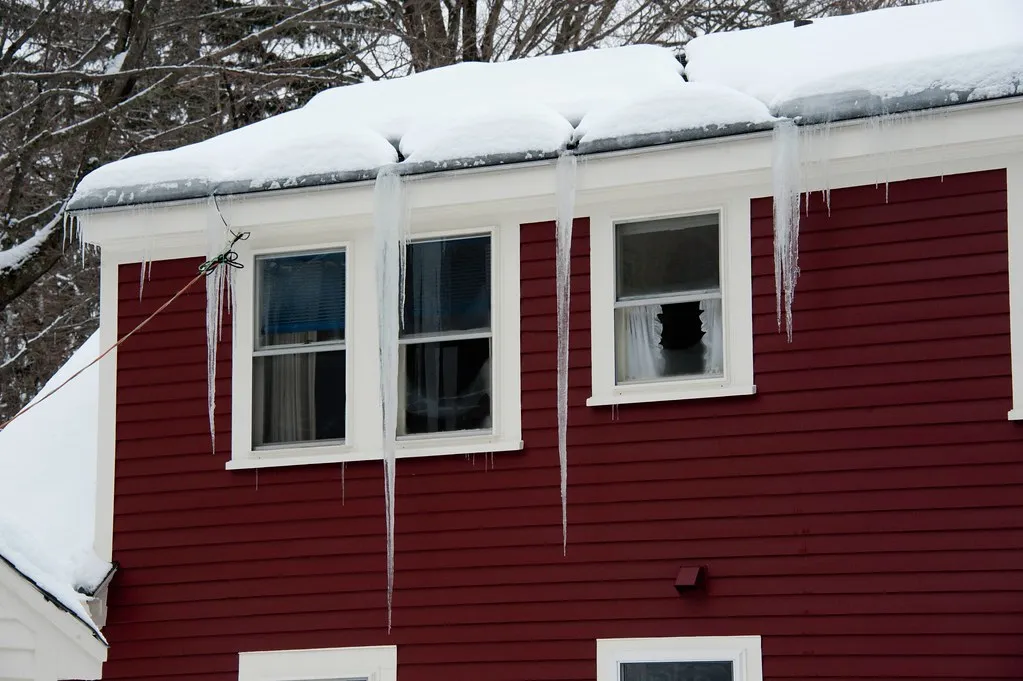
Chester County winters swing between snow, rain and hard freezes, sometimes in the same week. That cycle is exactly what builds ice dams. Malvern and the Great Valley area have plenty of older homes with additions, low-slope porch roofs and attic spaces that are hard to insulate, and those are the places ice dams show up first.
How an ice dam forms
- Snow sits on the roof.
- Heat escaping from the living space warms the roof deck above the attic.
- Snow melts on the warm part of the roof and the water runs down.
- At the eaves, past the warm part of the house, the roof is cold. The water freezes.
- Over several days the ice ridge grows. Melt water pools behind it.
- Shingles shed water downhill. They are not built to hold back standing water, so it seeps under them and into the house.
The giveaway is a thick ridge of ice along the gutter line and long icicles, with water stains showing up on ceilings near exterior walls.
What to do right now
- Catch the water. Buckets, towels and plastic sheeting on the floor.
- Relieve a bulging ceiling. If the drywall or plaster is sagging with water, place a bucket under it and puncture the lowest point with a screwdriver. A controlled drain is better than a sudden collapse.
- Kill power to wet fixtures. If water is near a light fixture or ceiling fan, shut off that circuit at the panel.
- Move belongings. Get furniture, electronics and rugs out of the drip zone.
- Check the attic if you can do it safely. Look for wet insulation and dripping roof sheathing near the eaves.
- Take photos of the ceiling, the attic and the ice on the roof from the ground.
What not to do
- Do not climb on an icy roof. Falls from ladders and roofs are a real risk in winter.
- Do not chop at the ice with an axe or hammer. It damages shingles and gutters.
- Do not use open flames or heat guns on the roof.
- Do not throw rock salt on the roof; it can damage plants, metal and roofing below.
A long-handled roof rake used from the ground can pull snow off the lower edge of the roof and slow new melt. Safe ice removal at the eaves is a job for a roofer with the right equipment.
Why the water damage often spreads
Ice dam leaks are slow. Water soaks into attic insulation first, then the ceiling below, then into the top of the wall cavity along the exterior wall. By the time a stain shows on the ceiling, the insulation above may be saturated.
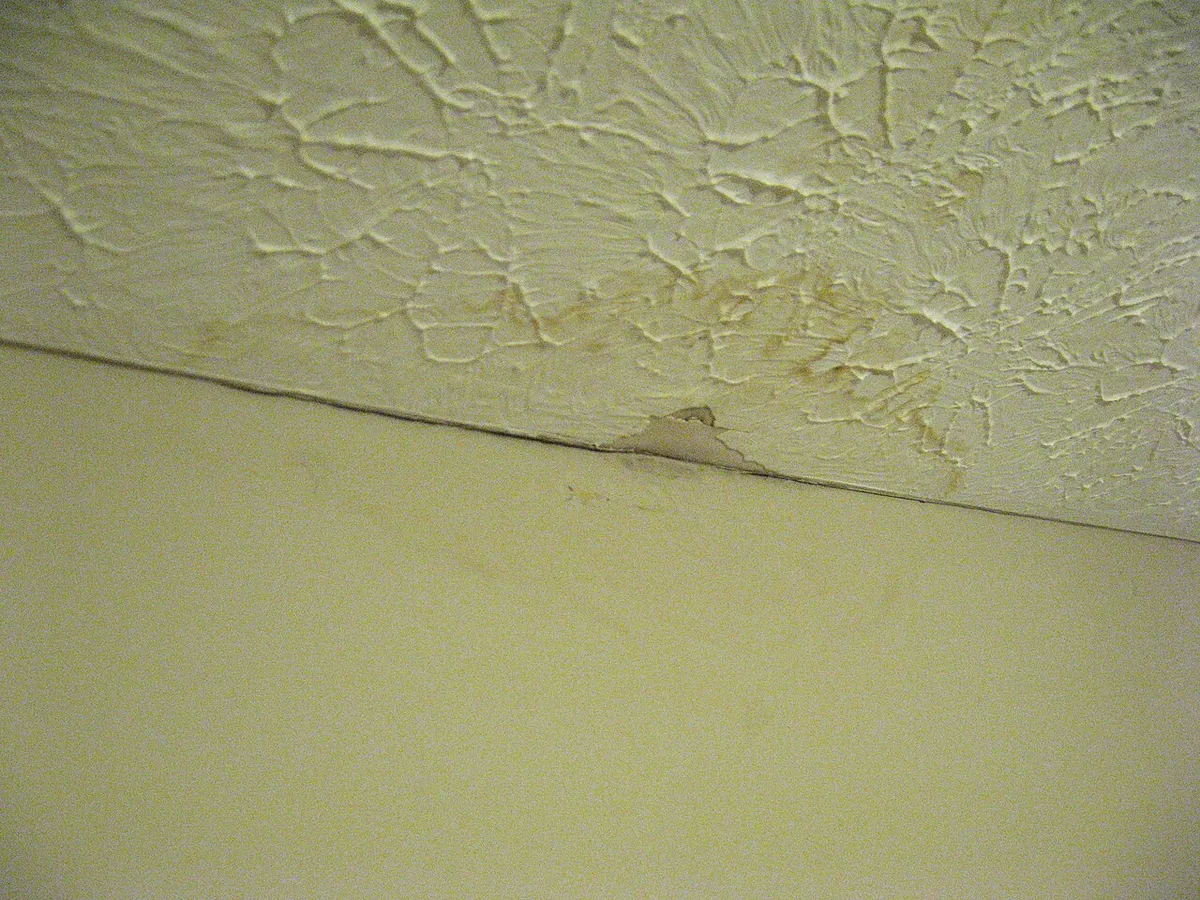
Wet fiberglass insulation loses its ability to insulate and can stay damp for a long time. Wet cellulose packs down and holds water against the drywall. Both need attention.
Drying the attic and ceiling
The EPA recommends drying wet building materials and furnishings within 24 to 48 hours to prevent mold growth (EPA mold and moisture guide). After an ice dam leak, that usually means:
- Removing saturated insulation near the eaves.
- Drying the roof sheathing and framing from the attic side.
- Drying or removing wet ceiling drywall. Plaster ceilings may dry in place if they are still sound.
- Checking the top of exterior walls for moisture with a meter.
- Monitoring readings until materials return to normal.
Mold risk after ice dam leaks
Attic sheathing near the eaves that stays damp through a winter is a common place to find mold in spring. If you have had ice dams in past years, look for dark staining on the underside of the roof deck near the eaves. Our attic mold guide covers what that staining means and how it is treated.
Long-term fixes
Removing the ice solves today's leak. Stopping next year's needs a look at why the roof is warm.

- Air sealing. Warm air leaking into the attic through light fixtures, attic hatches, plumbing chases and top plates is a major cause.
- Insulation. Adequate, evenly spread insulation keeps heat in the living space.
- Ventilation. Soffit and ridge venting keeps the roof deck closer to outdoor temperature.
- Bath and kitchen fans should vent outdoors, not into the attic. EPA lists venting moisture-generating sources to the outside as a basic moisture control step (EPA mold and moisture guide).
- Roof underlayment. When a roof is replaced, ask about a waterproof membrane along the eaves.
Insurance
Many homeowners policies treat sudden water damage from ice dams differently from the cost of fixing the roof or insulation problem that caused it. Read your policy and photograph everything before repairs. The Pennsylvania Insurance Department has consumer guides if you have questions about your claim.
Winter weather alerts
The National Weather Service office in Mount Holly covers Chester County (NWS Mount Holly). Watching the forecast for snow followed by a deep cold snap gives you a few days to rake snow from the lower roof before ice builds.
A quick attic check you can do in the fall
Before winter, spend ten minutes in the attic with a flashlight. Look for:
- Bath fan ducts that end in the attic or have come loose from the roof or soffit vent.
- Gaps around light fixtures, pipes and the attic hatch. Dirty or dark insulation often marks where warm air is leaking up.
- Insulation pushed into the eaves so it blocks soffit vents.
- Old water stains on the sheathing near the eaves, which point to past ice dams.
- Thin spots where insulation was moved by electricians, cable installers or past leaks.
From outside, the morning after a light snow, look at the roof. Bare patches or quick melting over certain rooms show where heat is escaping. Those are the spots where ice dams are most likely to start.
Gutters help but are not the cause
Clogged gutters can make ice buildup worse at the edge of the roof, so clean them in late fall. But ice dams form on homes with clean gutters too. The real cause is a warm roof deck above a cold edge, which is why air sealing and insulation matter more than any gutter product.
Frequently asked questions
Can an ice dam cause a ceiling to collapse?
A ceiling holding pooled water can sag and fail. If a ceiling is bulging, put a bucket underneath and make a small drain hole at the lowest point to relieve the weight.
Will my wet ceiling dry on its own?
Sometimes, but the insulation above often stays wet. Have moisture readings taken in the ceiling and attic. Materials that stay wet beyond a day or two can grow mold.
Are heat cables a fix for ice dams?
They can keep a channel open in problem areas but do not fix the heat loss that causes ice dams. Air sealing and insulation address the cause.
When should I call a professional?
Call if water is coming through a ceiling, if insulation is wet, if a light fixture is involved, or if leaks return every winter.
Sources
- EPA: A Brief Guide to Mold, Moisture and Your Home
- National Weather Service, Mount Holly office
- Ready.gov: Winter weather
- Pennsylvania Insurance Department
Water coming through your ceiling?
Call (484) 293-9520 24/7 or use the quote form. We handle storm damage and water damage drying in Malvern and across Chester County.