
If your AC is leaking water through the ceiling, the cause is usually a clogged condensate drain line or an overflowing drain pan under an air handler in the attic. Turn the system off at the thermostat, catch the water, and have the drain line cleared. Then dry the ceiling and attic insulation quickly, because damp, warm attics are an easy place for mold to grow.
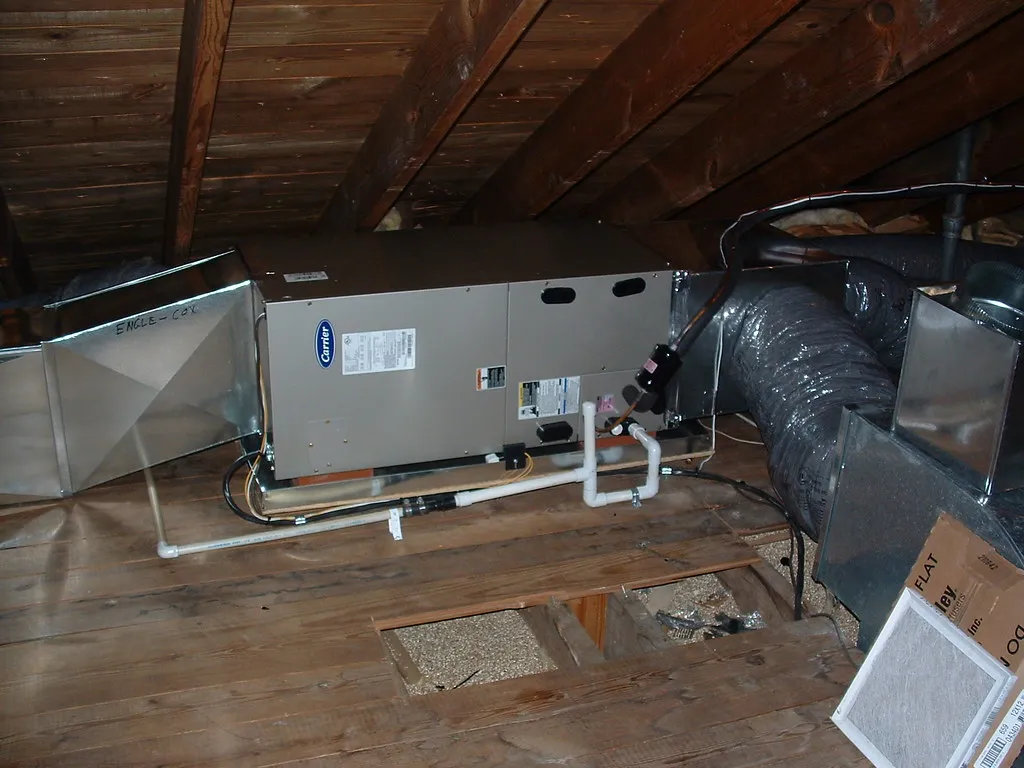
Many homes in Malvern and the Great Valley area have second floor air handlers in the attic, especially newer homes and older homes that had central air added later. On hot, humid Chester County summer days, an air conditioner pulls a lot of water out of the air. When that water cannot drain, it overflows.
How an air conditioner makes water
As warm, humid air passes over the cold evaporator coil, moisture condenses on the coil, like water beading on a cold glass. That water drips into a pan and flows out through a condensate drain line, usually to a floor drain, the outdoors or a condensate pump.
When the system is in an attic, there is often a secondary pan under the unit to catch overflow. Some systems have a float switch that shuts the AC off when the pan fills.
Common causes of AC ceiling leaks
- Clogged condensate line. Algae, slime, dust and debris build up in the line.
- Rusted or cracked drain pan.
- Disconnected drain line in the attic.
- Failed condensate pump.
- Missing or failed float switch in the overflow pan.
- Frozen evaporator coil from low airflow or a refrigerant problem. When the ice melts, it can overwhelm the pan.
- Condensation on uninsulated ducts in a hot attic, which drips onto insulation.
What to do right now
- Turn the AC off at the thermostat.
- Catch the water with buckets and towels.
- Relieve a bulging ceiling by placing a bucket under it and making a small hole at the lowest point.
- Shut off power to wet light fixtures at the panel.
- Check the attic if safe: look at the drain pan, the line and the insulation around the unit.
- Call an HVAC technician to clear the line and check the system.
- Photograph the ceiling, attic and unit.
What EPA says about AC drip pans and moisture
The EPA's moisture guide lists keeping air conditioning drip pans clean and drain lines unobstructed and flowing properly as a way to prevent mold (EPA mold and moisture guide). It also recommends keeping indoor humidity below 60 percent, ideally between 30 and 50 percent.
EPA also advises not to run the HVAC system if you know or suspect it is contaminated with mold, since that can spread spores through the building.
Drying the ceiling and attic
- Insulation. Wet fiberglass loses its insulating value and can stay damp. Wet cellulose packs down. Wet insulation near the unit is usually removed and replaced.
- Ceiling drywall. Small wet areas can sometimes be dried in place. Sagging or stained drywall usually needs to be cut out.
- Framing. Joists and the top plates of walls need moisture checks.
- Air movement and dehumidifiers in the room below and, where possible, the attic.
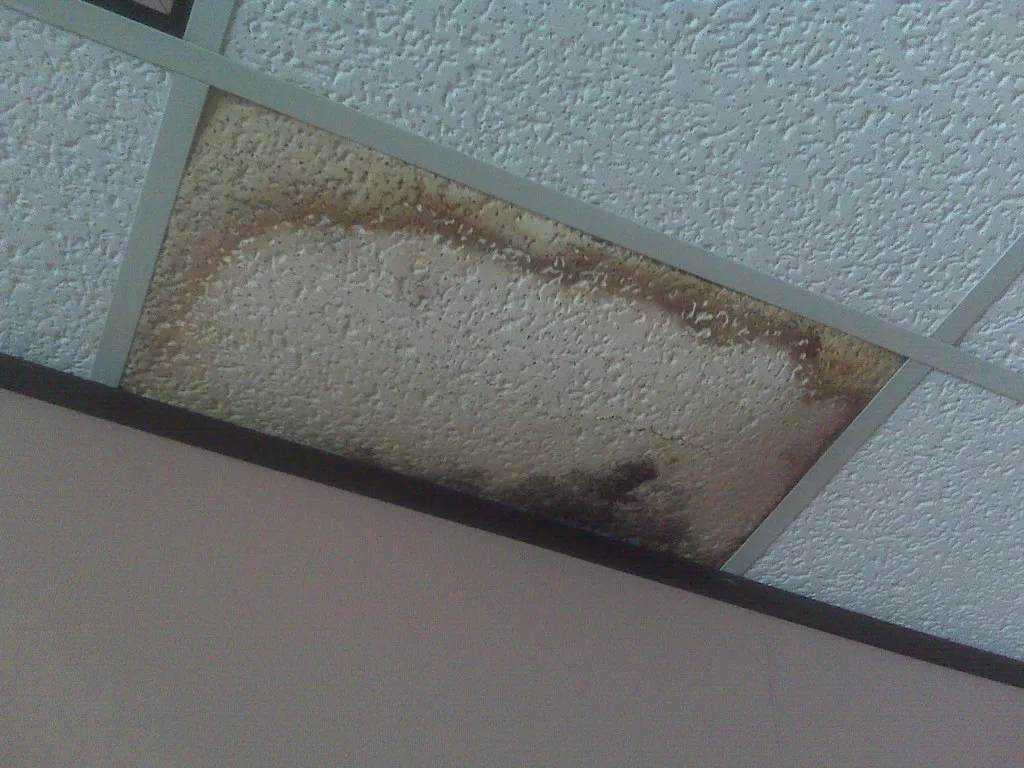
The EPA's 24 to 48 hour drying guideline applies here too. Attics in summer are hot and can be humid, conditions that favor mold if wet materials sit.
Mold in the ceiling or attic
If the leak went on for a while, look for:
- Dark spots or fuzz on the back of the ceiling drywall.
- Mold on the drain pan, the air handler cabinet or nearby framing.
- A musty smell when the AC runs.
Mold inside the air handler or ductwork needs professional cleaning. Our attic mold guide covers what to look for on roof sheathing and framing, and our mold removal team handles cleanup.
Prevention
- Have the system serviced each year, including the condensate line and pan.
- Install a float switch on the overflow pan if you do not have one.
- Insulate ducts in unconditioned attics.
- Change filters regularly to keep airflow up and prevent coil freezing.
- Check the attic around the air handler a couple of times each summer.

Insurance
Policies differ on HVAC leaks. Sudden overflow damage may be treated differently from gradual leaks or maintenance issues. Photograph damage and talk to your agent. The Pennsylvania Insurance Department has consumer resources.
Summer attic checklist for homes with an air handler upstairs
A quick look at the attic unit a few times each summer can catch most of these leaks before they reach the ceiling.
- Look in the secondary pan under the unit. It should be dry. Water in that pan means the primary drain is not keeping up.
- Check the float switch, if you have one. It should sit in the pan or on the drain line, connected and upright.
- Follow the drain line from the unit to where it leaves the attic. Look for sags, disconnects and cracks.
- Look at the ducts. Sweating ducts drip on insulation. Damp, matted insulation under a duct is a sign.
- Smell the air. A musty smell near the unit can mean standing water or mold in the pan or cabinet.
- Check the filter. A clogged filter cuts airflow, which can freeze the coil.
Where the water should go
Find out where your condensate line ends: outside near the foundation, into a plumbing drain, or to a condensate pump. If it ends outside, make sure the outlet is not buried in mulch or blocked by plants. If you have a pump, listen for it running and check that its tubing is intact. Knowing where the line ends lets you confirm it is dripping when the AC runs on a humid day.
What to tell the HVAC technician
The restoration crew dries the house, but an HVAC technician fixes the cause. Giving them clear information saves time on a Malvern service call.
- Where the water showed up: which ceiling, near which vent or light, and whether it was a stain, a drip or a steady flow.
- When it started, and whether the system was running hard on a hot, humid day.
- Whether the system has a float switch or safety switch that shut it off, and whether the system stopped cooling.
- What you saw in the attic, if you were able to look safely, such as water in the drain pan or a disconnected or sagging drain line.
- When the system was last serviced and whether the drain line has been cleared before.
Ask the technician to note the cause and the fix on the invoice. If you file an insurance claim for the ceiling damage, that written cause is helpful. Ask too whether a safety switch or a secondary drain pan makes sense for your attic setup.
Frequently asked questions
Why is my AC leaking water through the ceiling?
Most often, the condensate drain line is clogged and the drain pan overflowed. Other causes include a cracked pan, a disconnected line, a failed condensate pump or a frozen coil.
Is it safe to run my AC while it is leaking?
No. Turn it off until the drain is cleared. Running it adds more water to the ceiling and insulation.
Can I clear the condensate line myself?
Some homeowners can clear a simple line, but attic units can be hard to reach safely. An HVAC technician can clear the line and check the pan and float switch.
Will my ceiling need to be replaced?
Small wet areas may dry in place. Sagging, stained or moldy drywall usually needs replacement after drying the framing and insulation.
Sources
- EPA: A Brief Guide to Mold, Moisture and Your Home
- EPA: Mold cleanup in your home
- Pennsylvania Insurance Department
AC dripping through your ceiling?
Call (484) 293-9520 24/7 or use the quote form. We dry ceilings and attics after HVAC leaks in Malvern. See our Malvern water damage page.