
If your water heater is leaking, shut off the cold water supply to the tank, turn off the power or set a gas unit to its pilot or off setting, and keep clear of the relief valve and hot water. Then find where the leak is coming from. A leak from fittings at the top can often be repaired. Water from the tank itself usually means the tank needs to be replaced.
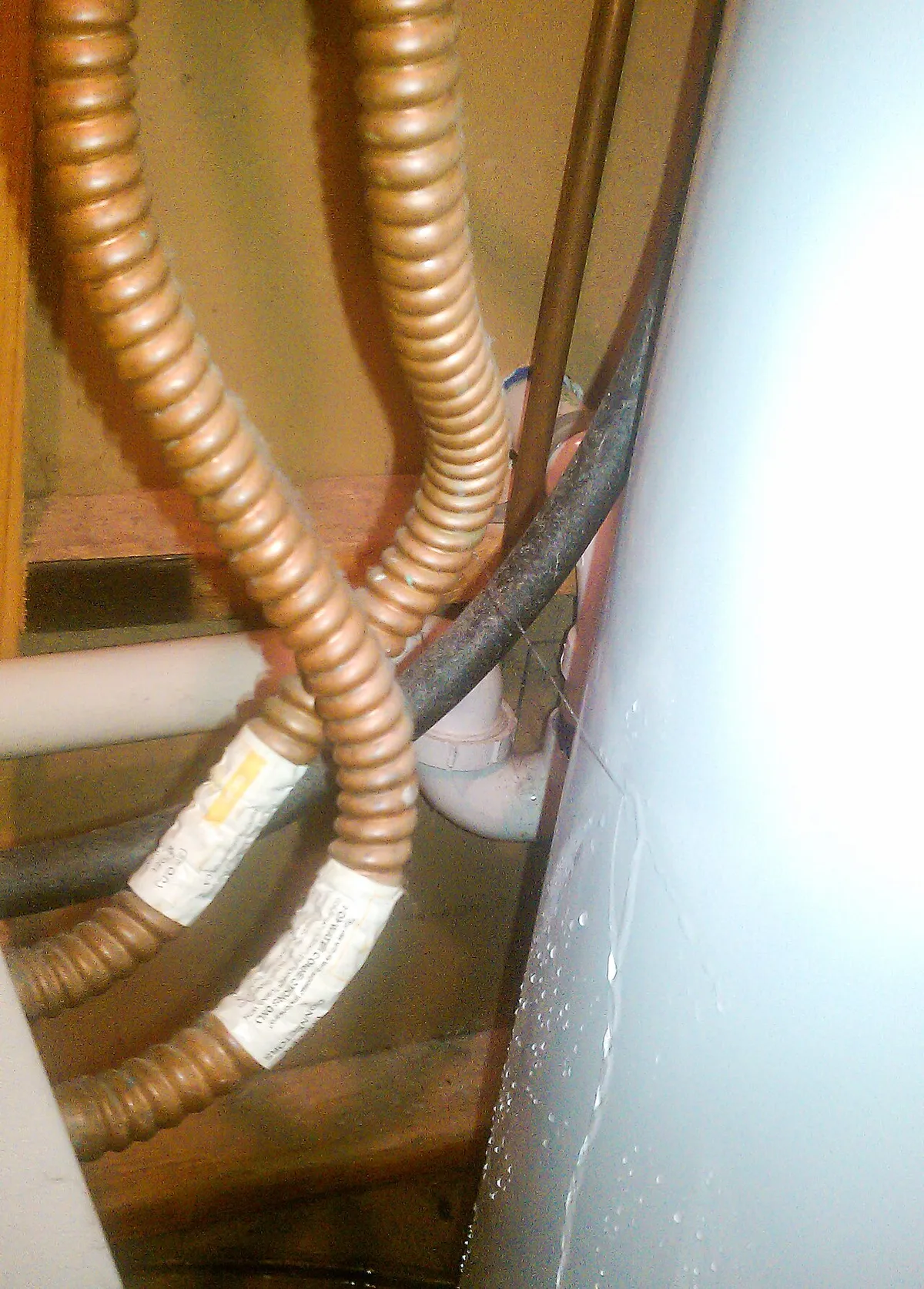
Exton has a lot of townhomes and newer single homes where the water heater sits in a finished basement, a closet off a hallway or a utility room next to living space. A tank failure there can soak carpet, drywall and flooring within an hour.
First steps
- Stay safe. Water near the tank may be hot. Do not touch the relief valve discharge pipe.
- Shut off the cold supply. There is usually a valve on the cold water line at the top of the tank. Turn it clockwise.
- Turn off the energy source.
- Electric: switch off the breaker for the water heater.
- Gas: turn the control knob to off or pilot according to the label on the tank.
- Contain the water. Towels, a wet vac, and moving boxes and rugs away from the tank.
- Photograph the tank, label, floor and any affected walls or ceilings below.
- If the leak is from the tank itself, connect a garden hose to the drain valve at the bottom and drain the tank to a floor drain or outside, once the water has cooled.
If you smell gas, leave the house and call your gas utility from outside.
Where is it leaking from?
| Leak location | Common cause | Usual fix |
|---|---|---|
| Top fittings | Loose connections, worn flex lines | Tighten or replace connectors |
| Temperature and pressure relief valve | High pressure or temperature, or a failing valve | Have a plumber check pressure and the valve |
| Drain valve at bottom | Valve worn or not fully closed | Tighten or replace the drain valve |
| Bottom of tank or under the jacket | Internal tank corrosion | Replace the water heater |
| Puddle but tank dry | Condensation, nearby pipe, HVAC condensate | Trace the true source |
About the relief valve
The temperature and pressure relief valve is a safety device. It opens to release water if pressure or temperature in the tank gets too high. Water dripping from its discharge pipe means something needs checking. Never cap or plug the relief valve or its pipe.
How bad is the water damage?
Water from a leaking heater is clean water at first. But it spreads under flooring, wicks up drywall and soaks into carpet pad. Signs the damage spread:

- Carpet wet more than a few feet from the tank.
- Baseboards swelling or drywall darkening at the bottom.
- Water stains on a ceiling below a closet or utility room.
- Musty smell after a day or two.
The EPA recommends drying wet materials within 24 to 48 hours to prevent mold growth (EPA mold and moisture guide). In finished basements, carpet pad and the bottom of drywall often need to come out to dry properly.
Drying a finished basement or utility room
- Extract standing water.
- Lift carpet and remove wet pad.
- Remove baseboards and check drywall with a moisture meter.
- Cut wet drywall above the wet line if it does not dry quickly.
- Run air movers and dehumidifiers and monitor readings daily.
Our water damage restoration crews document readings so your insurer sees when the space is dry.
Repair or replace?
Replace the heater if the tank itself is leaking. A leaking tank cannot be patched. Repair is reasonable for leaks from fittings, connectors, the drain valve or a faulty relief valve on an otherwise sound tank.
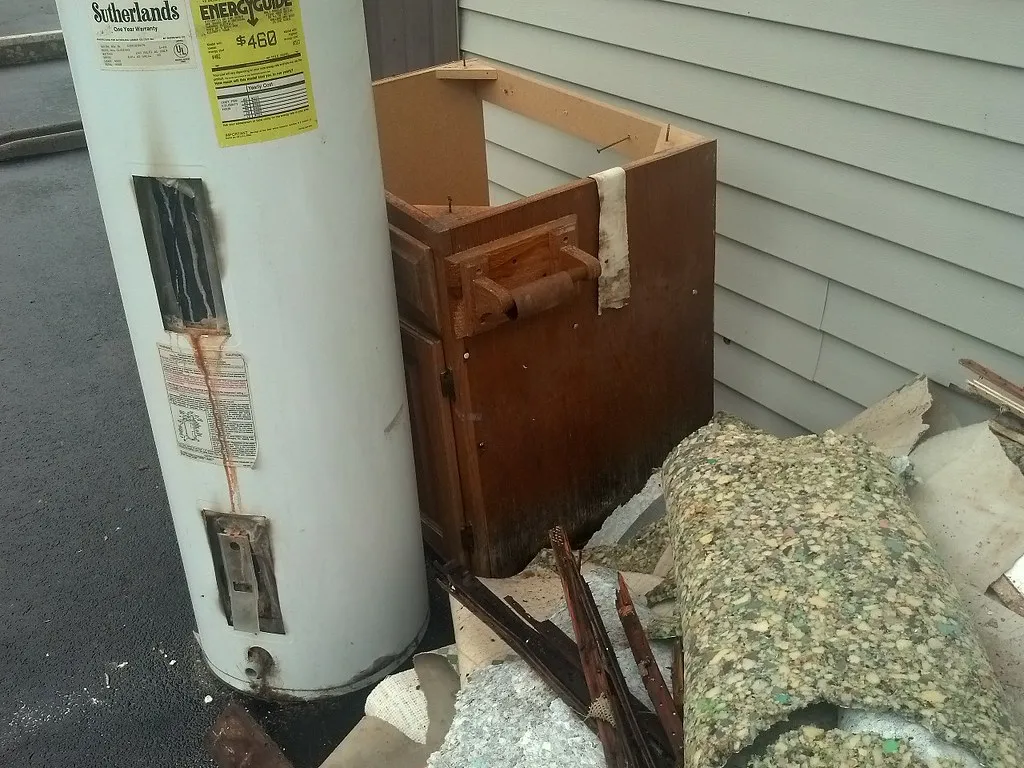
When you replace, consider:
- A drain pan under the new tank, piped to a drain where possible.
- A leak sensor or automatic shutoff valve.
- Clearances and venting that meet code. Gas water heaters need proper combustion air and venting.
- Permits. Many municipalities require permits for water heater replacement. Check with your township.
Gas water heaters and carbon monoxide
Gas and oil water heaters vent combustion gases. If a water heater is replaced or its vent is disturbed during cleanup, make sure the vent is reconnected properly. Have working carbon monoxide alarms on every level of your home.
Insurance
Sudden water damage from a burst or leaking tank is often treated differently from the cost of the water heater itself. Many policies cover the resulting water damage but not the appliance. Read your policy and photograph everything. The Pennsylvania Insurance Department has consumer guides.
Prevention
- Look at the tank, fittings and floor around it every few months.
- Test the relief valve according to the manufacturer's instructions.
- Keep boxes and stored items away from the base of the tank.
- Install a leak alarm near the tank.
- Know where your main water shutoff is.
Reading the label and planning the replacement
The label on the side of the tank tells you a lot before the plumber arrives. Photograph it. It usually lists:
- Fuel type (electric, natural gas or propane).
- Capacity in gallons.
- Model and serial number. Many manufacturers encode the manufacture date in the serial number, which helps you judge the tank's age.
- Recovery rate or wattage, which affects how fast hot water comes back.
Questions to ask your plumber
- Does the replacement need a permit and inspection in my township?
- Is the existing vent the right size for the new unit?
- Does the new heater need an expansion tank on my water supply?
- Where can a drain pan drain to in this location?
- How will the old tank be disposed of?
Before the new tank goes in
Make sure the floor and the wall behind the old tank are dry. A new water heater set on a damp floor, in a closet with wet drywall, traps moisture where nobody will look again for years. Ask the drying crew to clear the space before the plumber sets the new unit.
What to tell the plumber when you call
A clear description helps the plumber bring the right parts and decide how soon to come. Before you call about a leaking water heater in your Exton home, gather a few details.
- Where the water is coming from: the bottom of the tank, a pipe fitting at the top, or the relief valve discharge pipe on the side.
- Whether the leak is a steady drip, a trickle or a spray, and whether it stopped after you closed the cold water supply.
- Gas or electric, and the brand, model and serial number from the label on the tank.
- Whether you smell gas or the pilot light is out. If you smell gas, leave the house and call the gas utility or 911 from outside.
- How much floor got wet and whether water reached finished rooms, carpet or drywall.
Take a few photos of the label, the leak and the floor before anything is moved. Those same photos help your insurer and give a restoration crew a head start on drying.
Frequently asked questions
Is a leaking water heater dangerous?
It can be. Hot water can scald, water near electrical connections is a shock risk, and gas units have combustion and venting hazards. Shut off water and energy to the tank and call a qualified plumber.
Can I still use hot water if my water heater is leaking?
If the leak is from the tank, no. Shut it down. If the leak is a loose fitting, a plumber may be able to fix it the same day.
How long does it take to dry a basement after a water heater leak?
Often several days with professional equipment, depending on how far water spread and what materials got wet.
Will my carpet be ruined?
Not always. Clean water caught quickly can often be dried with the carpet lifted and the pad replaced. Carpet that stays wet for days may need to be replaced.
Sources
- EPA: A Brief Guide to Mold, Moisture and Your Home
- EPA: Mold cleanup in your home
- Pennsylvania Insurance Department
Water heater flooded your floor?
Call (484) 293-9520 24/7 or use the quote form. We dry out basements, closets and utility rooms after water heater leaks in Exton and across Chester County. See our Exton water damage page for details.