
Dishwasher leak damage is usually slow and hidden. Water seeps from a worn door gasket, a loose supply line or a cracked drain hose, runs under the unit and spreads beneath flooring and cabinet bases. Look for soft or lifting floor near the dishwasher, swollen cabinet toe kicks and stains on the ceiling below. Stop the leak, pull the toe kick, and check moisture before it reaches the subfloor.
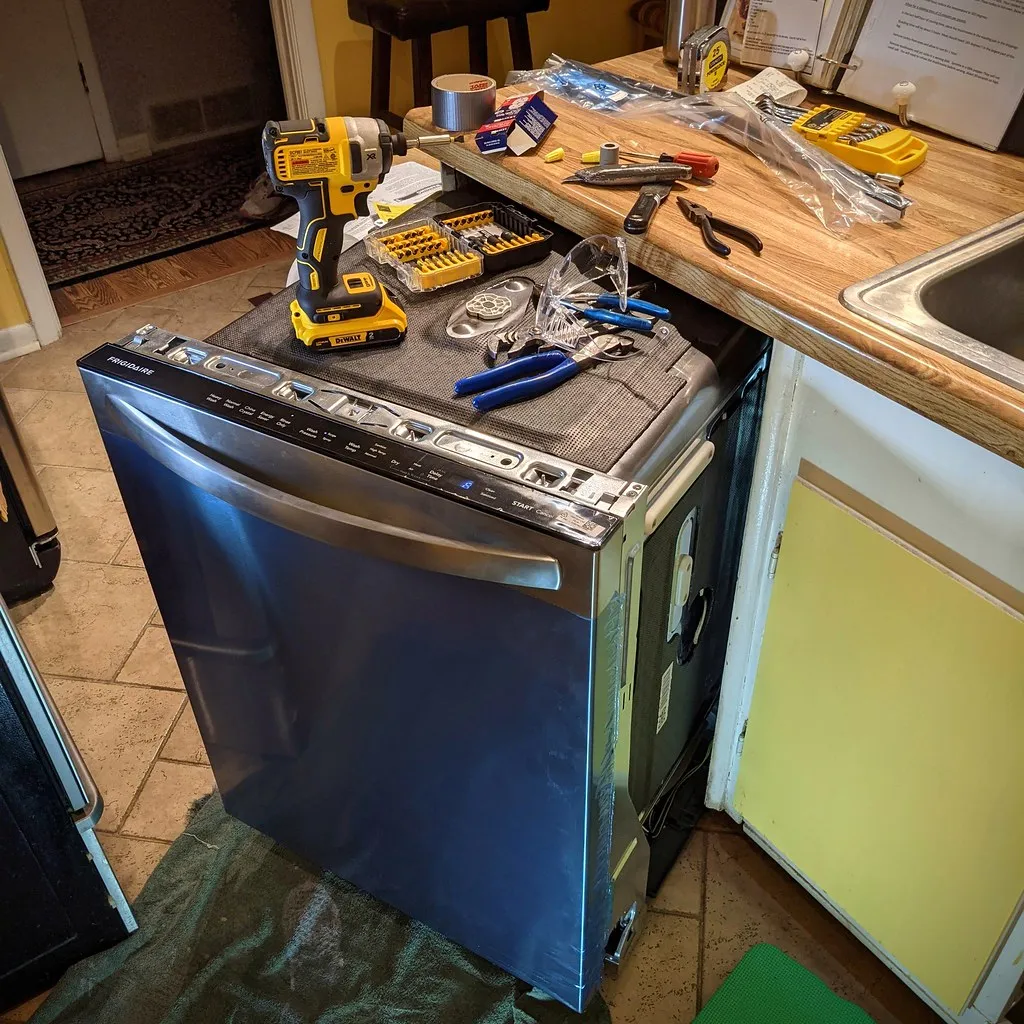
Kennett Square has a mix of older borough homes and newer kitchens in the surrounding townships. Many have laminate, engineered wood or vinyl plank flooring, which hides moisture well until it starts to buckle.
Common sources of dishwasher leaks
- Door gasket. A cracked or dirty seal can drip at the front edge during wash cycles.
- Supply line. The hot water line that feeds the dishwasher can loosen or corrode at its fittings.
- Drain hose. Cracks or loose clamps at the sink drain or disposal connection.
- Pump or internal seals. Water appears under the unit during cycles.
- Overfilling or wrong detergent. Suds can push water out of the door.
- Not level. A dishwasher tipped forward can leak at the door.
Signs of hidden dishwasher leak damage
- Flooring near the dishwasher feels soft, cupped or raised.
- Laminate seams swelling or peeling.
- Vinyl plank shifting or with gaps.
- Cabinet toe kicks swollen or delaminating.
- Musty smell when you open the sink cabinet.
- Water stain on the ceiling or joists below the kitchen.
- Rust on the dishwasher's front feet or mounting brackets.
What to do
- Stop using the dishwasher.
- Shut off water to the dishwasher at the valve under the sink, usually the hot line.
- Cut power at the breaker or unplug it if it plugs in under the sink.
- Pull the toe kick panel at the bottom front of the dishwasher. Look for water, stains or rust.
- Check the sink cabinet floor and the hose connections.
- Look below. If you have a basement or crawlspace, check the subfloor and joists under the kitchen with a flashlight.
- Photograph what you find.
Checking the floor and subfloor
Surface flooring can look fine while the subfloor underneath stays wet. A moisture meter gives you real numbers. Readings near the dishwasher compared to dry areas across the room tell you how far water traveled.
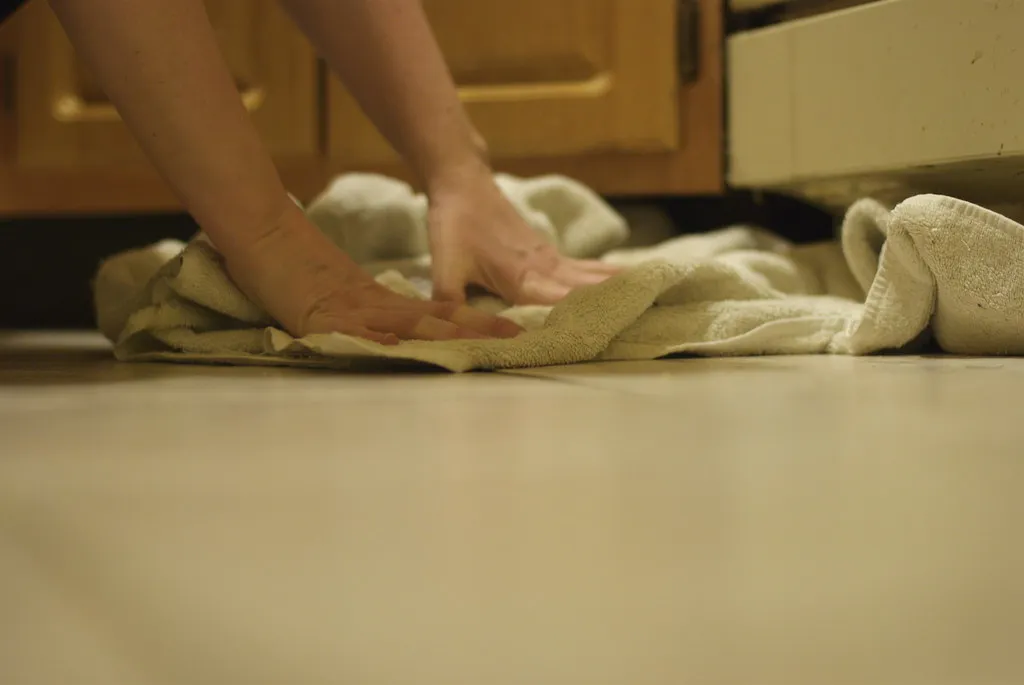
Different floors, different outcomes
- Sheet vinyl and tile trap water underneath. The subfloor below can stay wet a long time.
- Laminate swells at the seams and usually cannot be saved once it does.
- Engineered wood may cup or delaminate.
- Solid hardwood may dry with careful drying, depending on how long it was wet.
- Vinyl plank often survives, but water underneath still needs drying.
Cabinets
Many kitchen cabinets have particleboard bases that swell and crumble when wet. Plywood cabinet boxes hold up better. If the base of the sink cabinet is soft or swollen, it may need to be replaced or reinforced. Cabinet toe kicks can often be removed to dry the space underneath.
Drying
The EPA recommends drying wet materials within 24 to 48 hours to prevent mold (EPA mold and moisture guide). For kitchen leaks, drying often means:
- Removing toe kicks and opening cabinet bases for airflow.
- Pulling the dishwasher out to dry under it.
- Removing flooring that traps water over the subfloor.
- Drying the subfloor from above and below.
- Monitoring with moisture readings.
Mold under the dishwasher
If the leak was slow, mold may already be growing on the subfloor, the back of the cabinets or the underside of the flooring. EPA's guidance says that if there has been a lot of water damage, or mold covers more than about 10 square feet, consult its guide for larger remediation jobs (EPA: Mold cleanup in your home). Our mold removal team handles kitchen mold when it is found during drying.
Repair and rebuild
After drying:
- Replace damaged subfloor sections.
- Replace or repair cabinet bases.
- Install new flooring that matches as closely as possible. Matching discontinued flooring can be hard. Some homeowners choose to replace the whole kitchen floor.
- Reinstall the dishwasher with new supply and drain connections, and level it.
Prevention
- Check the supply line and drain hose once a year.
- Replace the door gasket if it is cracked or brittle.
- Use only dishwasher detergent, in the recommended amount.
- Put a leak sensor under the sink or in the toe kick area.
- Watch the floor near the dishwasher for any change.
Checking the kitchen yourself in ten minutes
You can do a quick check before calling anyone.
- Look along the floor with a flashlight held low and flat. Cupping, raised seams and gaps show up better with light from the side.
- Press on the floor in front of the dishwasher and next to the sink cabinet. Compare how it feels to a spot across the room.
- Open the sink cabinet and look at the cabinet floor, the back wall and the hose connections. Feel for dampness.
- Remove the toe kick on the dishwasher. Most come off with two screws. Look for standing water, rust and stains.
- Look underneath from the basement if you have one. Find the spot directly under the dishwasher and look for stains, drips or soft wood.
- Run a short cycle with the toe kick off and watch with a flashlight. Many leaks only show during the fill or drain part of a cycle.
When a leak is too old to dry
If the subfloor is soft, the cabinet base is crumbling or you find mold, drying alone will not fix it. Those materials need to come out. In that case, ask for a scope that covers the subfloor, cabinet base and flooring together, so you are not opening the kitchen twice.
Talking with your insurer about a slow leak
Slow leaks raise different questions than sudden ones. Many homeowner policies treat a sudden appliance failure differently from damage that built up over a long time, so the details you give matter. Read your own policy or ask your agent how it handles each case.
- Write down when you first noticed a sign of the leak, such as a soft floor, a musty smell or a warped toe kick, and what you did next.
- Keep the failed part if a plumber or appliance technician replaces it, such as a cracked supply line, a worn door gasket or a loose drain connection.
- Ask the technician to note the cause on the invoice. A written cause helps the adjuster understand what happened.
- Photograph the floor, subfloor and cabinet base before anything is removed, and include moisture readings if a restoration crew takes them.
- Do not throw away removed flooring or cabinet parts until the adjuster says it is fine.
Clear records help in Kennett Square kitchens and anywhere else. They show what failed, when it was found, and that you acted quickly once you knew.
Frequently asked questions
How do I know if my dishwasher is leaking under the floor?
Look for soft, cupped or raised flooring near the dishwasher, swollen toe kicks and stains below the kitchen. A moisture meter can confirm water under the floor.
Can laminate flooring be saved after a dishwasher leak?
Usually not once the seams swell. Laminate cores absorb water and do not return to shape.
Does homeowners insurance cover dishwasher leaks?
Sudden leaks are often treated differently from long-term seepage. Check your policy and document the damage. Many policies exclude damage from leaks that continued over time.
Should I replace my dishwasher after a leak?
Not always. Many leaks come from hoses, gaskets or connections that are inexpensive to replace.
Sources
Floor lifting near the dishwasher?
Call (484) 293-9520 or use the quote form. We dry kitchens and subfloors after appliance leaks in Kennett Square. Learn more on our Kennett Square water damage page.